
The Universal Dance Association, (UDA), is a national college dance competition held annually at the Walt Disney World resort in Orlando, Fla.
The competition took place from Jan. 16-18, exhibiting the most accomplished dancers from all over the country. Teams must qualify through regionals or sanctioned events.
Each team prepares three routines to compete, one following each category: jazz, pom and hip-hop. Collegiate teams must compete in three rounds: preliminaries, semifinals and finals in order to have a chance at earning a ranking. Only 10 teams have the potential to earn a ranking.
Teams are judged on their musical interpretation, routine staging, movement composition and difficulty of technical elements. Communication, projection and overall effect are averaged across all judges. Competing teams have the opportunity to earn 10 points for each component, ultimately being able to receive up to 60 points for a perfect performance.
“Something I think non-dancers fail to realize is just how difficult these routines are,” Brooklyn Dujon, freshman on the Jupiter High dance team said. “These athletes make their dances seem effortless when in reality, they’re incredibly challenging.”
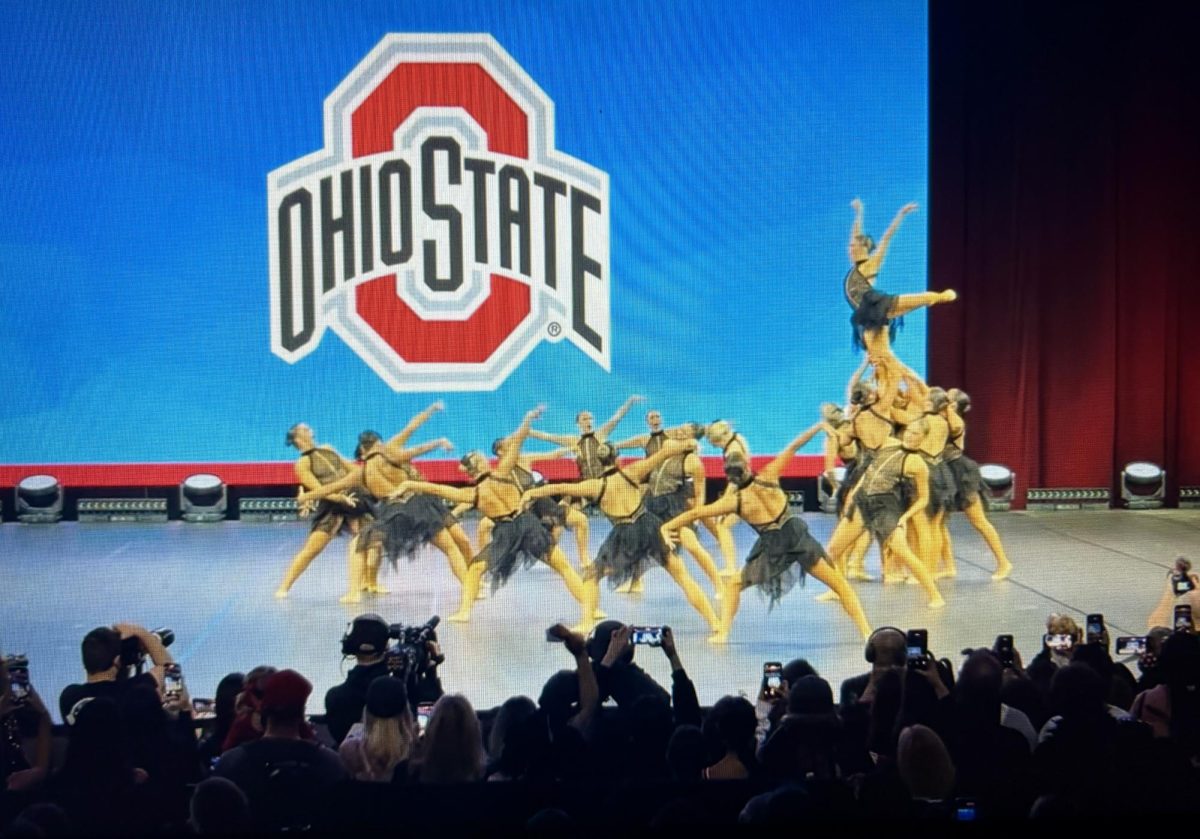
Notable qualifiers for this year’s competition included Ohio State University (OSU), notorious for their ground-breaking jazz performance in 2024, University of Minnesota (UMN), University of Nevada Las Vegas(UNLV), California State University (CSU), Weber State University (WSU), Grand Canyon University (GCU) and Southeastern Louisiana University (SLU).
Ohio State was awarded first in D1A jazz, marking the third consecutive year they’ve been awarded this title.
Though it is not by any means mandatory, many teams include “a la seconde” turns in their competitive routines, typically adding their own touch to it, whether that be different arms or an additional step. A la seconde turns are looked upon as one of, if not the most difficult turns to do as a dancer.
Ohio State utilized these turns in their jazz routines for all three years they’ve competed, and all of which they received first in the D1A Jazz category. In this year’s competition, the dancers gave the illusion that their turns were glitching in order to hit the precise beats marked in the song, ultimately captivating both the judges and the audience.
Other teams threw in tricks as well, such as Texas Tech University (awarded second place in D1A pom).
“I was shocked by Texas Tech’s Pom routine this year. They normally don’t rank very well, but this year they came in second place and they did a full team back tuck. I think that played a large role in how well they placed,” Noya Attias, dancer for the Jupiter High dance team said.
Utilizing their incredible skills, these dancers have given us yet another year of pure entertainment competing in the UDA Nationals.
“I was pleasantly surprised by the performances given this year. Next year, I hope to see more jazz -appearing dances rather than lyrical or contemporary dances competing under the jazz category. ”