
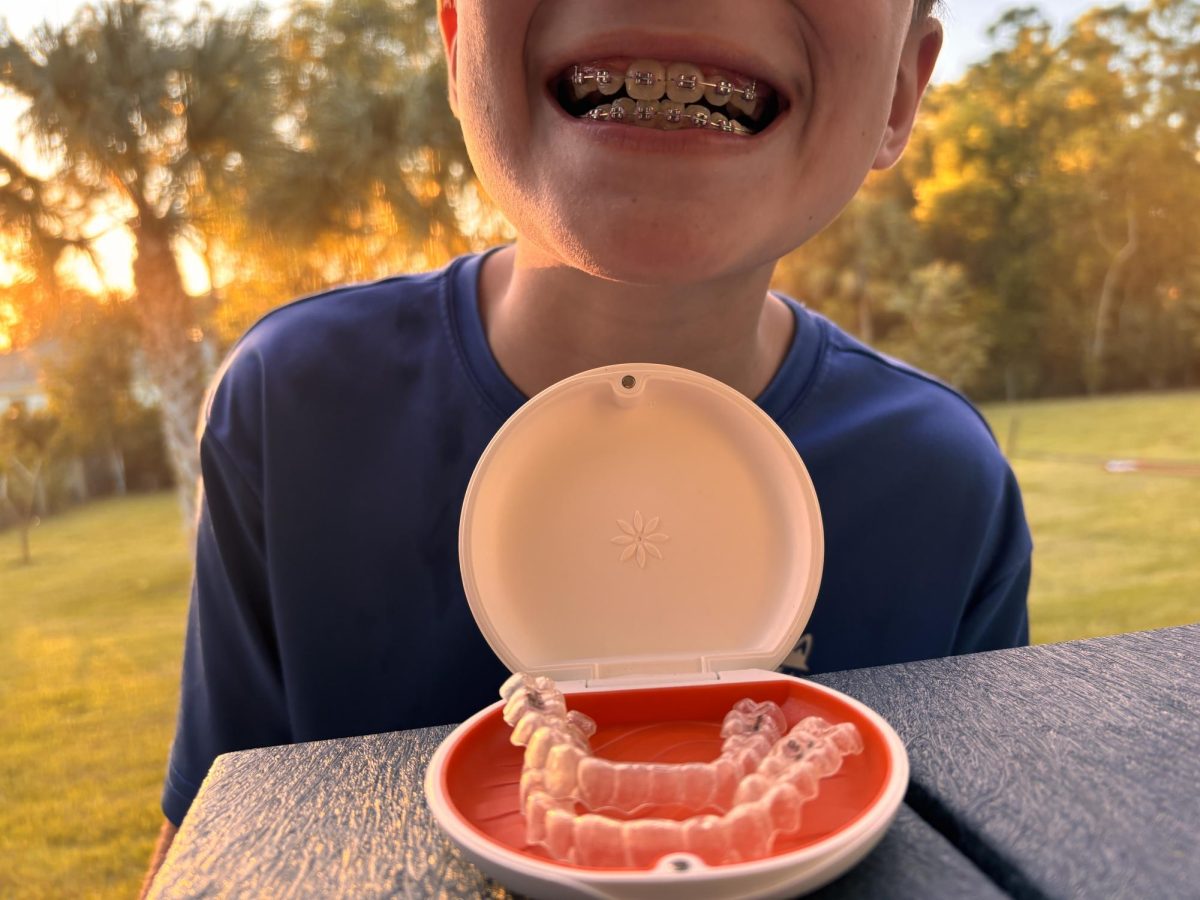
For many people, crooked teeth become an issue early on in life, typically around the age of 11. Braces have been the main solution to this problem since the early 1900s and have had little competition until the early 2000s when “Invisalign” retainers gained traction.
Invisalign retainers have become a popular alternative to braces, with about 18 million people having used or currently using Invisalign. They’re smooth, plastic models of your teeth, made to be a little tight to help adjust your teeth. much more comfortable and are mostly unnoticeable all while giving the same effect as braces.
“I thought it was comfortable but I really just didn’t like it because you had to wear it for 20 hours a day,” Tyler David, freshman Invisalign user, said.
Braces, on the other hand, tend to be more uncomfortable for patients. The wires and brackets give people cuts and they often cause soreness, especially after getting them tightened.
“The worst part about my braces was the pain in the beginning when I first got them. They made my teeth and gums sore and it was hard to eat for a while,” Kyle Silveira, sophomore with braces, said.
As well as causing discomfort, braces limit the kinds of food you can eat. It is recommended not to eat chewy or sticky food with braces, along with harder foods like some candies to avoid breaking brackets or damaging the braces. Gum should be avoided, too, as it can get stuck on your braces and is very difficult to chew.
“It was sort of difficult to adjust to not being able to eat certain foods. I have to be cautious with what I eat so that I don’t break a bracket,” Silveria said.
With Invisalign, there are no restrictions on the food you can eat. When you go to eat, all you have to do is take your retainer out and eat as you normally would.
“There weren’t any restrictions with what I ate but I just had to take the retainer out when I ate and then I had to brush my teeth and brush the retainer. I had to soak it in mouthwash, too.”, David said.
However, regardless of what you eat with braces, you’re almost bound to get food stuck in your braces or teeth. This makes eating with braces annoying and it can be difficult to remove the food from where it’s stuck, especially because you have to floss your teeth a specific way or use flossers meant for braces.
“It’s really irritating when I’m eating and the food gets stuck in my braces. It bothers me a lot and just makes eating annoying sometimes,” Silveira said.
Braces will most likely last you longer than Invisalign, too. Even though braces cannot be removed regularly like Invisalign, they still take longer on average to see the same results, with them usually taking about 12 to 24 months.
Invisalign takes less time than braces, averaging around 9 to 18 months for finished results. It can be shorter or longer, though, depending on how your teeth are before using Invisalign.
“For the lucky few, it can last as little as six months, but for others, it may take up to 24 months,” Dentistry in Canterbury, said.
On top of the amount of benefits that Invisalign has over braces, they can cost less than traditional braces. The average cost of braces range anywhere from $3000 to $7000 while the average cost of an Invisalign retainer can be from $3000 to $6800.
Although braces and Invisalign retainers effectively solve the same problem, Invisalign is much easier and affordable.