
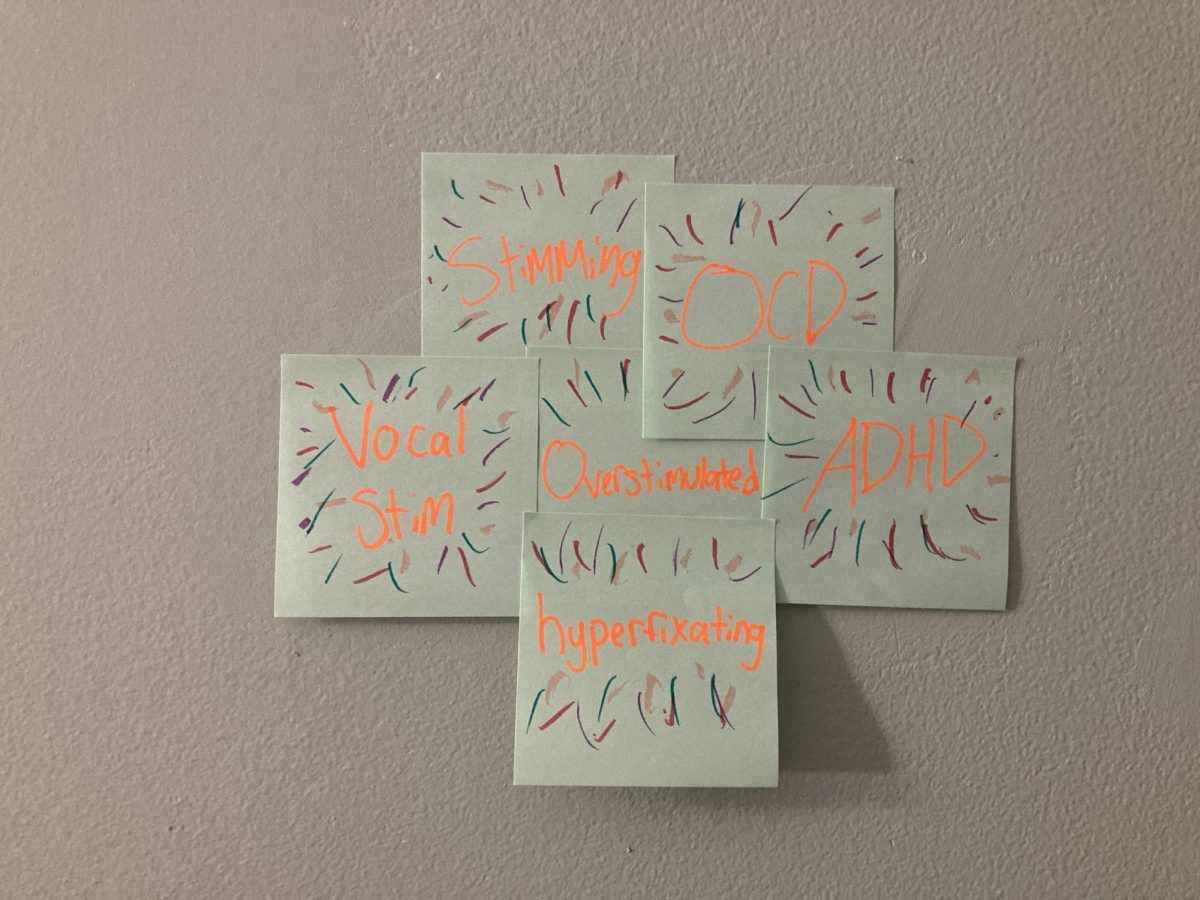
Open TikTok or Instagram, and it doesn’t take long to notice a new pattern in language. People describe themselves as “overstimulated” with an overload of homework, say they’re “hyperfixating” on a TV show or call phrases from popular memes their new “vocal stim.” These terms, originally used to describe experiences and behaviors of neurodivergent people, have become part of everyday Generation Z slang.
“Overstimulation” refers to a level of sensory input which becomes overwhelming and can cause real distress. “Hyperfixation” describes an intense, often uncontrollable focus associated with Attention-Deficit/Hyperactivity Disorder that can interfere with daily responsibilities. “Stimming” refers to repetitive behaviors used to regulate emotions or sensory input, especially in people with Autism Spectrum Disorder, with vocal stims specifically being vocal behaviors.
Some argue broader use of these terms reflects greater awareness. Neurotypical people can also relate to these terms to some extent, and using them regularly can help normalize common neurodivergent behaviors.
“Neurodivergence is a very wide spectrum, so even if you are neurotypical, you can still have those sorts of moments,” Natasha Olivencia, freshman, said. “It’s not appropriate to use those words if you’re making fun of it, but I think it’s okay if you use it correctly.”
The main problem with overusing these words is misunderstanding their meaning. “Hyperfixation” is now used to describe any interest or hobby. “Overstimulated” is used to mean stressed or overwhelmed. “Stimming” is applied to any small repetitive action, regardless of purpose. As usage expands, the original meanings become less precise.
This shift has consequences. When these words lose specificity, they become less useful for the people who rely on them. It becomes harder to communicate the difference between everyday discomfort and experiences that can be disruptive or disabling. The language no longer clearly signals the seriousness of those conditions.
“I think [misusing neurodivergent terms] takes away from the meaning of the words, which kind of invalidates the neurodivergent community,” Lillian Strain, sophomore, said.
There is also a broader effect on understanding. Casual use can make neurodivergent experiences seem overly universal rather than distinct. This can lead to misunderstandings about what conditions like autism or ADHD actually involve.
Using these terms is not inherently wrong, but accuracy matters. It is reasonable for anyone to use this language if it reflects the correct meaning. What matters is not adopting the words, but preserving what they were meant to describe.
“Neurotypical people can experience those things, but it’s definitely to a lesser extent,” Strain said, “there’s better words to use if you are neurotypical.”