
From fourth through tenth grade, Palm Beach County students take district and state mandated writing tests, Palm Beach Performance Assessment (PBPA) and Benchmarks for Excellent Student Thinking (B.E.S.T), throughout each year.
After nearly every writing test, many students find themselves hearing the same words around their English classroom:
“They’re always about cell phones, and it’s really boring how it’s the same thing over and over again,” Ricki Phipps, freshman, said.
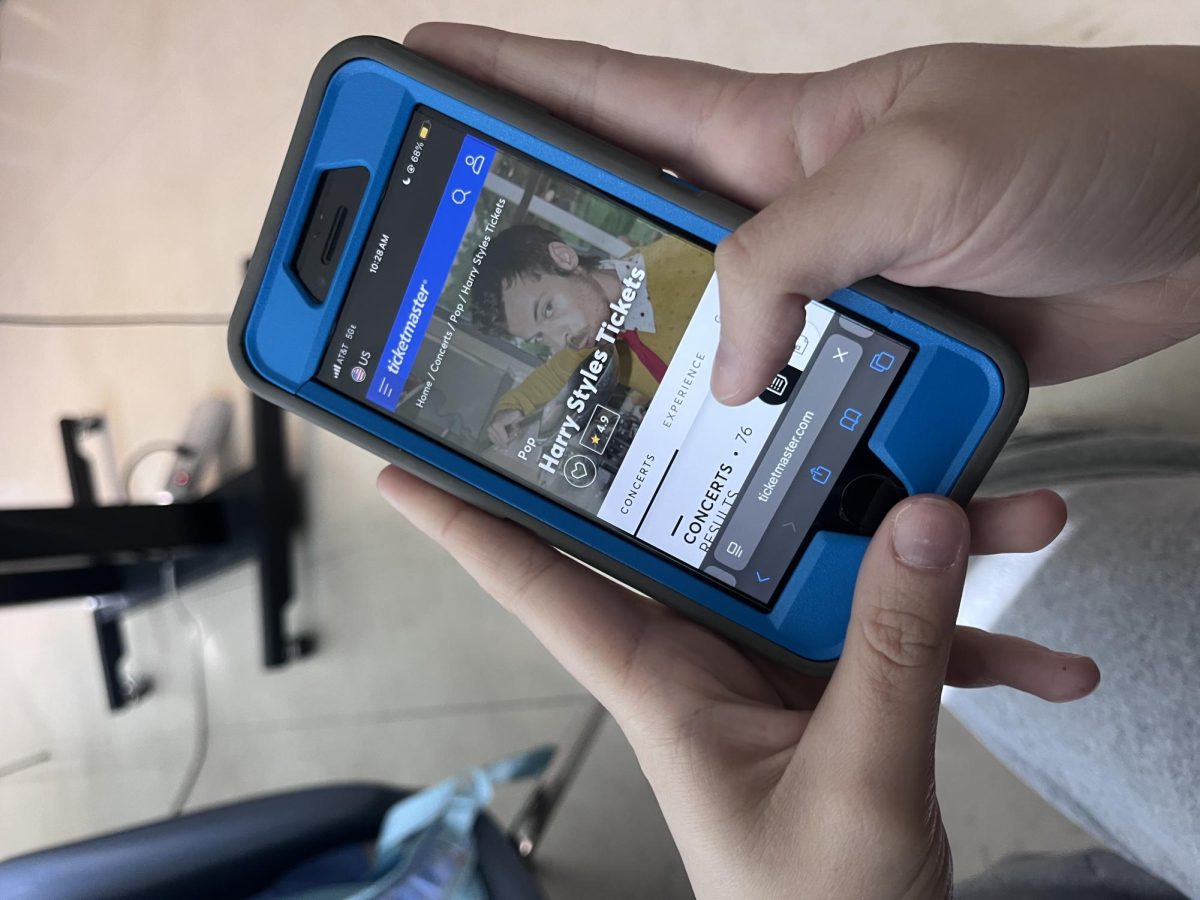
The common denominator between most writing prompts is technology: Artificial Intelligence (AI), video games, social media or screen time.
The issue with this is not only that students get bored, but it also has a negative effect on the quality of education. If students are writing the same essays over and over, their writing and critical thinking skills aren’t really improving.
“It gets repetitive for them. They’re only really practicing writing about one topic,” Julie Bohsali, AICE General Paper teacher, said.
Students at Jupiter High School (JHS) have also noticed that argumentative writing tests often have an unbalanced amount of evidence provided to support each side.
“I remember writing a lot about how social media impacts kids. They would only provide evidence for the negative without providing much for the positive,” Grace Daversa, junior, said.
Some believe this may be due to ulterior motives, and the district wants to limit us to choosing a certain standpoint, possibly swaying our actual opinions.
“They were always on pro-AI stances, and you were kind of encouraged to write about how it will revolutionize the world and change everyone’s life for the better,” Holly Wang, junior, said. “In a way, it feels like propaganda.”
While that may be true, others assume that prompts are made about technology because it is both relevant to teenagers and a current popular topic in general.
No matter what the reason is behind having repetitive essay prompts, there should be more variety to increase educational value and keep students engaged. There are other relevant topics besides technology that students deserve to learn and write about.
“If I was the one deciding the prompts, I would want underclassmen to be able to write about all forms of art and environmental issues,” Kevin Mullen, junior, said.
Another idea for resolution is that students should have options of what to write about instead of being confined to a single prompt.
“I think it would be nice to give them a choice of prompts to choose from,” Bohsali said. “Students would get to write about something they are interested in, and teachers wouldn’t have to grade the same essay over and over again.”
If schools want students to truly grow as thinkers and writers, it’s time to rethink essay prompts. Today’s children and teenagers are more than just technology—they deserve to write about a variety of topics.
“I think the repetition in prompts shows that these educators only see students as phone addicts and nothing else,” Sloane Widmann, freshman, said.