
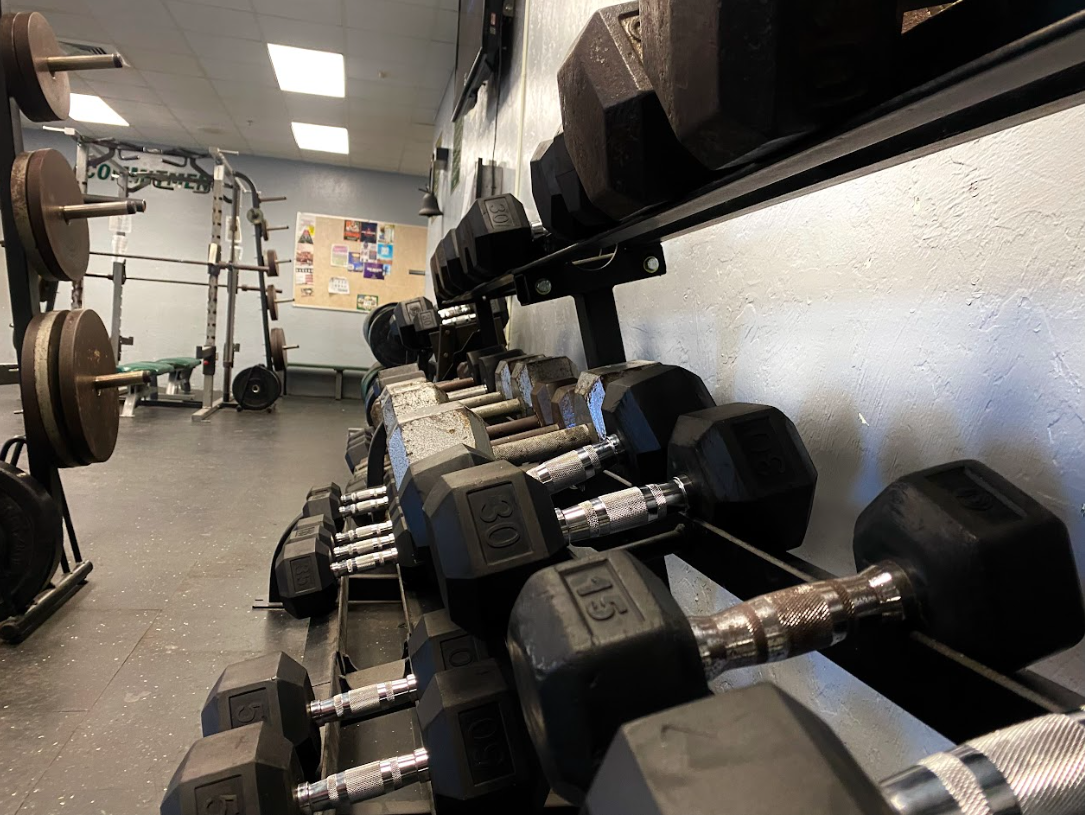
At 4:15 a.m. on Feb 16., Marley Kilpatrick, junior, known online as Marley Linden, woke up to work out at her gym in Palm Beach Gardens.
On the days where Linden works out in the morning, she has a routine before she gets ready for school. She wakes up, makes her pre-workout (a dietary supplement), prepares her breakfast and then works out for about an hour.
Going to the gym and working out has become increasingly popular in recent years among teens and high school students.
But with AP/AICE classes, schedule-consuming sports, part-time jobs, volunteering or college applications, taking the time to take care of one’s physical health has sunk lower and lower on a high school students’ priority list.
Linden’s schedule is packed. She is a Student Government Association (SGA) member, an ice figure-skater and sings for the Jupiter High School’s Spectrum and Warrior Women. In order to stay committed to going to the gym, Linden has to figure out a schedule that works for her.
“The days that I skate, I don’t go to the gym, I take those as rest days,” Linden said.
The typical time in which students are working out at the gym is often after school. However, this afternoon time-slot is not ideal for everyone. Finding a schedule that works for your commitments can be hard, but is possible.
“I’m able to go to the gym before or after practice. So then if we have a game, I can work around it,” Gustavo Melendez, senior, said.
Melendez is a pitcher for the school Baseball team. To balance practices and working out, Melendez goes to the gym three times a week on the off-days of baseball practice.
With this increase in popularity, gym culture has become romanticized. What once was a dreaded chore to stay fit is now an opportunity to workout while simultaneously filming content, showing off trends or connecting to a newly popularized community.
With the rise in people’s online involvement through social media after the 2020 pandemic, the concept of vlogging or documenting one’s gym experience has also been gaining prominence.
As sharing information on social media has become more prominent, it’s become harder to avoid toxicity online.
“With the popularity increase, it’s also lost a lot of what was actually meant to be a part of the culture. Which was actually learning and helping people get physically fit,” Adrian Steiner, senior, said.
Steiner started working out with encouragement from his fitness-forward family, through things such as Cross-fit and Soccer. Steiner eventually fell in love with weightlifting.
Oftentimes online influencers’ gym content is showcasing their physique, what a glamorized version of their workout looks like and using their platform for financial gain and brand deals.
This has the danger of promoting comparison between regular people’s bodies with influencers bodies. People are prone to forget the fact that they have access to editors, a lighting setup and carefully positioned angles.
“So the second you see your own progress and then you compare it to someone who has been maybe working out the same amount of time as you, but they have this brand deal or something. Eventually it will build a toll on you,” Steiner said.
Many of these influencers post videos about the gym as their full-time job. They are spending much more time in the gym and therefore have more time to dedicate to growing muscle, becoming leaner or eating the diet that will further these goals than the average person.
Social media is responsible for plenty of mental health issues among teens. With this mass addiction to comparing ourselves with an idealized version of others’ lives.
“The image that people are working towards has changed. I remember in my childhood, the body image was like Kim Kardashian. Now we’re seeing a shift towards more like Alix Earle,” Ava Scotten, senior, said.
Scotten has been working out since freshman year and currently runs her own fitness account. Exercising is a big part of her life, having originally started going to Palm Beach Sports Club through getting a job there. She’s established a committed relationship with consistency to working out and is proud to share it online.
In recent years, healthy sources for gym content have actually been found among what students post. Gen-z has grown up with social media and technology, learning its impacts from a young age.
“I want to be someone that people are able to relate to. I post transitions, I post food stuff, what I eat in a day, my workouts,” Linden said.
Linden originally started posting to keep herself consistent with working out. She learned how it keeps her accountable, having her posting frequency grow her following which in turn motivates her to practice regularity and keep to a routine.
People have gym accounts for different reasons and many have the intention of simply being a lifestyle account. A lifestyle gym account typically serves as a place for people to learn workouts, recipe options or feel more confident in working out themselves.
“I try my hardest to be as transparent as I can, I do like being able to follow people that are very real and honest with struggles and challenges,” Linden said.
If young people or anyone just starting out in the gym are unsure where to start, social media can be a good resource. However, it needs to be accompanied with substantial and genuine research. It’s important to start out small and learn what works for your own individual body.
“Go online and look up long form videos. Where they go in depth about how muscles contract, the different heads of the bicep or how the fibers work,” Steiner said.
A healthy gym community does not look like influencers starting each video with a body shot of a well-lit and fit person sucking in. It looks like sharing of resources that might work for one person but transparency that it won’t work for everyone. It looks like a space where people aren’t ashamed of their appearance and are instead uplifted for their hard work. This type of community is growing within Gen-z and within the students at Jupiter High School.