
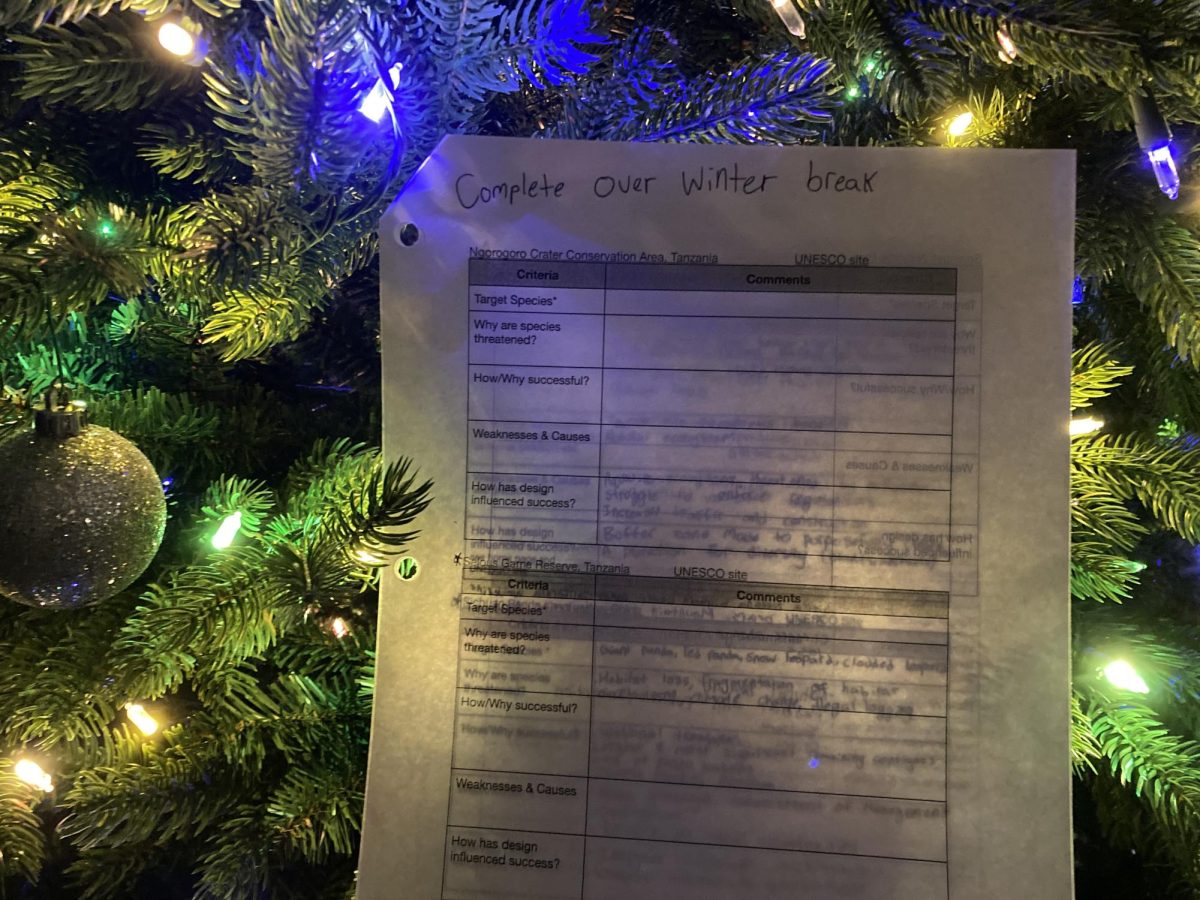
As the holiday season is here, students discuss the controversial topic of homework over break. Most students look forward to resting, traveling and spending time with loved ones. Yet many realize their joy is being overtaken by homework. While teachers find assigning homework over long breaks can be beneficial, the reality is these assignments may be doing more harm than good.
For many JHS students, holiday homework interferes with their only opportunity for comprehensive recovery. The overwhelming pressure to complete projects, packets, essays or books often leads to stress, dread, or procrastination over what’s so-called “break.”
“It’s hard to spend time with my family and enjoy the holiday when all I can think about is what assignments are waiting for me,” Alana Platzer, senior, said.
Students believe holiday break is supposed to serve as mental rest. Instead, many are trying to balance time with their family while meeting their deadlines. One of the biggest concerns is students returning from break burning out. After a busy quarter with midterms and exams, students deserve a pause from rigorous expectations.
“By the time winter break comes around, we’re all exhausted and ready for a break, not homework to add to the burnout we’re already dealing with,” Emilia Figari, senior, said.
Not every student spends their break under the same conditions. Some may work, travel, or have family responsibilities. This causes students to be put in situations where they may not have access to tools for successful learning, instead making it feel like an added barrier.
“I travel over the whole break, so fitting in homework is completely unrealistic,” Platzer said.
Regardless of these concerns, some say adding a little work can help students from forgetting material over break. In theory, it helps learners stay motivated and engaged. However, the way students experience breaks may not align with this idea.
“When I get a break, I always come back to school more focused and refreshed. Winter break is the only time of the year I get to mentally rest,” Figari said.
Most teens admit they do their homework the first day of break or the night before school starts. This contradicts the idea of staying occupied with academics over break. Consequently, the learning benefit is minimal.
“Most assignments I get over break, I just end up rushing through the night before school,” Platzer said.
At JHS, some teachers agree with students that saying break is necessary for rest, reflection, and personal growth. Which is something that doesn’t always come from essays or worksheets.
“One of my teachers skips holiday homework. She believes break is meant for relaxing and spending time with families, not stressing over assignments,” Figari said.
Having downtime is essential for mental health, brain functioning, and developing life skills. When students have rest, they will return to school motivated and engaged. JHS students deserve a balance; academics are important, but so is mental well-being. If the goal of education is to assist students’ success, then schools need to think about whether holiday homework is beneficial or detrimental to that objective.
By reassessing the use of homework over breaks, JHS can significantly contribute to the establishment of a healthier and more efficient learning environment for all students.