

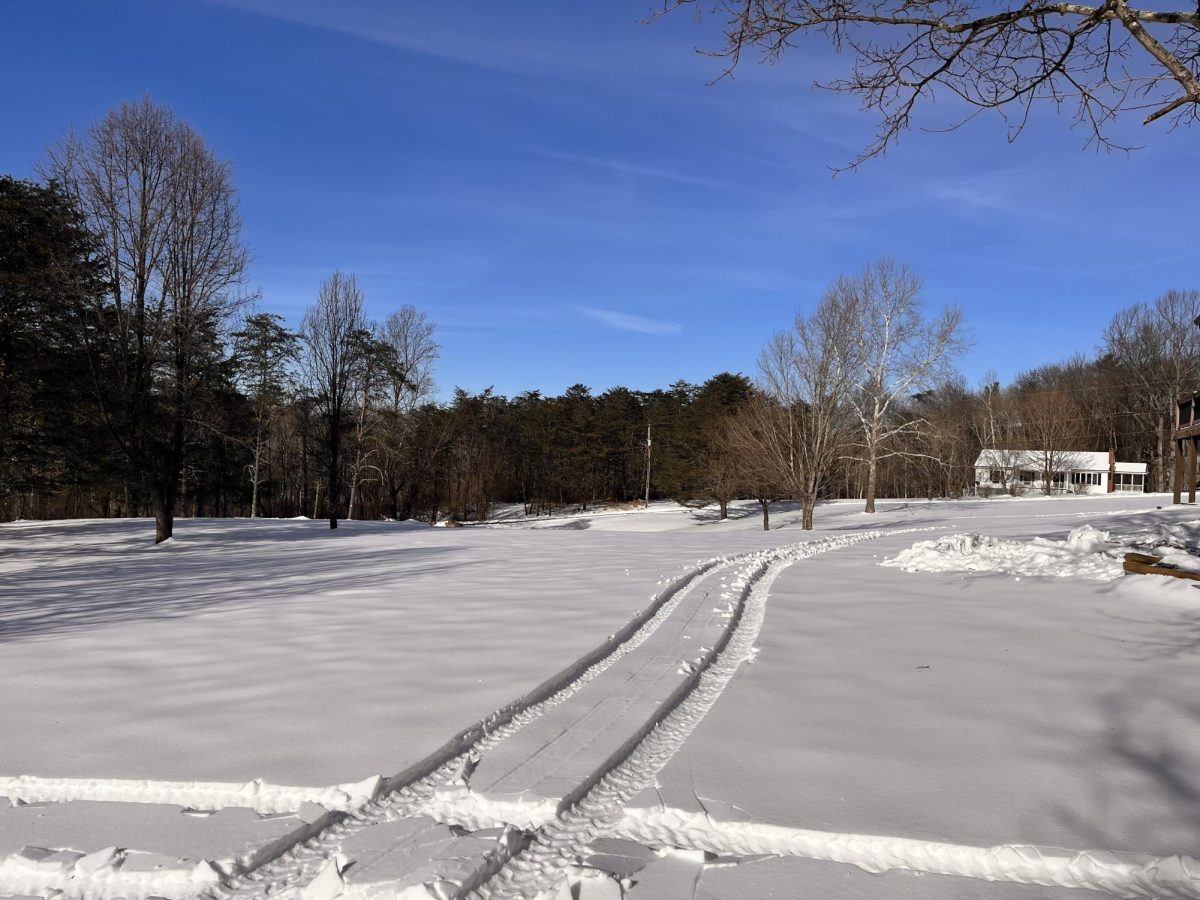
From New Mexico to Maine, storms have swept across the country impacting over 850,000 people and causing 25 reported deaths.
These storms are leading some to ask, what is causing this sudden cold weather?
It’s something called bombogenesis, or a bomb cyclone.
“Certain storms undergo bombogenesis, which happens when a storm’s central pressure drops at least 24 millibars [a metric unit of atmospheric pressure] in 24 hours,” the U.S. National Oceanic and Atmospheric Administration reported.
Simply, the pressure in a storm drops a lot in a short period of time. This produces heavy rain, wind and blizzard conditions. Bomb cyclones are common in Alaska, the Pacific Northwest and the Great Lakes region.
Bonito Lake, N. M., received 31 inches of snow, the most in recent history. Snyderville, Utah, received 34 inches; Ohio Valley areas saw up to two feet and 8.9 inches was recorded at Fla.’s Pensacola International Airport.. Jupiter, Fla., hit a record low 27 degrees fahrenheit.
Abnormal activities have come with this severe weather.
There have been sightings of what people are calling “exploding trees”, or what scientists call “frost cracks”. This happens when the temperature drops and the sap or water inside freezes.
When the tree cracks, it’s been said to sound like a gunshot or a really loud crack.
“Water expands as it freezes and it can happen usually under very, very drastic drops in temperature,” said Doug Aubrey, a professor at the University of Georgia’s Warnell School of Forestry and Natural Resources, in an interview with CNN.
Frost cracking in trees is most common in the Upper Midwest, Great Lakes region and northern states.
“It’s going to be loud, but it’s not dangerous. Wood doesn’t go flying through the area,” Aubrey said.
Residents in South Fla., woke up to find frost on their car windows and iguanas fallen from trees.
The Florida Fish and Wildlife Conservation Commission (FWC) collected over 1,000 iguanas in one day.
These iguanas are not dead,. they have just entered a state of torpor, or physical or mental inactivity, and will unfreeze eventually.
“Iguanas can recover from cold-stunning more quickly than you might expect and, once recovered, can act defensively, with long tails that whip and sharp teeth and claws,” the FWC said.
More frigid temperatures are expected to continue across the United States. Although the peak of the cold has passed, additional cold fronts can still be expected.





Anonymous • Feb 10, 2026 at 11:18 am
That sounds really cold. Thank God I live in Florida.